
A story about dying is always a familiar story, right? The ultimate change challenge? “They are dying!” I said, like this was a surprise or needed pointing out. The daffodils, poster girls for Spring, now looked like used latex gloves* on stubbornly green stems. My mother gave us the bunch early in self-isolation, soon after New York City had gone into lockdown. She cut them from the ruthless crop in her yard, as she did every spring when they briefly appeared. When my husband dropped off ice cream and Lysol spray (pandemic essentials), she sent them home for us--my husband, our 22 month old and our 4 year old-- to bring the outside in. The daffodils made me cry because they work. They are the symbol of arrival and transience, and they live and die boldly and quickly. They were also, very simply, from my mother. At that moment, my belly was ribboned with anxiety that she and my father, too, were facing imminent COVID transience. I imagined what so many are experiencing: final separation from us in an overwhelmed and handicapped hospital system. The fear for my parents, the longing to cling, flared up: is it ridiculous cling to summer’s bounty when autumn has already dusted the trees of their leaves? For how long can you save that last blueberry before it shrivels? But despite my contrafactual wish otherwise, die the daffodils did. I did not want to look at a dying thing on my table but I equally did not want to throw them out. Problem. Turn it into Art & Make Your Meaning So I dried them. I turned them upside down, bound their stems with a rubber band, and hung them from a random nail on the wall with a garbage twisty-tie. Their vibrant yellow faded, their vibrant green went dormant inside an unremarkable brown. But they did not rot, and they became something else beautiful. Something I could keep. I know, snooze, a story about daffodils drying. But stay with me here. Days later, my Continue Reading …
Integrity
COVID and College Admissions: Time to Get Genuine!

Last night, I felt heartened listening to the Applerouth college admissions panel on post/COVID college admissions landscape. It reaffirmed a hopeful facet of our current tragedy, which is acute here in New York City: that some things could change for the better-- namely, increased access to higher ed, a more genuine and equitable admissions process. And some really great essays. :) The warm panelists spoke about all aspects of admissions, but at Essay Intensive, we're always thinking about the written portions. And as a writing coach, I was thrilled to hear how excited the panelists were for the essays to come! They were encouraged by what gets stripped away, the pretense in applications, the excess of striving to be The Best and Most. But they are even more pumped about what gets expressed: students having no choice but to be their genuine selves telling colleges who they are--without the Circus of activities and commitments speaking for them. Smaller lives that mean a bigger deal. The panelists had some concrete advice for high school students of all ages at this time of stay-at-home orders, that aligns fully with what I’m always telling them. This is not about what or how to study, and it’s not about scores and metrics: Do something goofy!Enjoy whatever you can Work on your Time managementRead booksSpend time with your parents or family-- have those deep conversations, have the difficult conversations-- don’t put off meaningful conversations. Be guided by your passion to learn-- and learn something! This is forced self-reflective time like you might *never* have again in the same way! (And hopefully not for the same reason). And (honest) self-reflection is college admissions (essay) gold! What do you do when you suddenly have time? When left to your own devices? What’s inherently interesting to you? These are practically college essay prompts, living in your head and day to day decision making. The pay-to-play stuff is Continue Reading …
Reject Authority, Build Autonomy
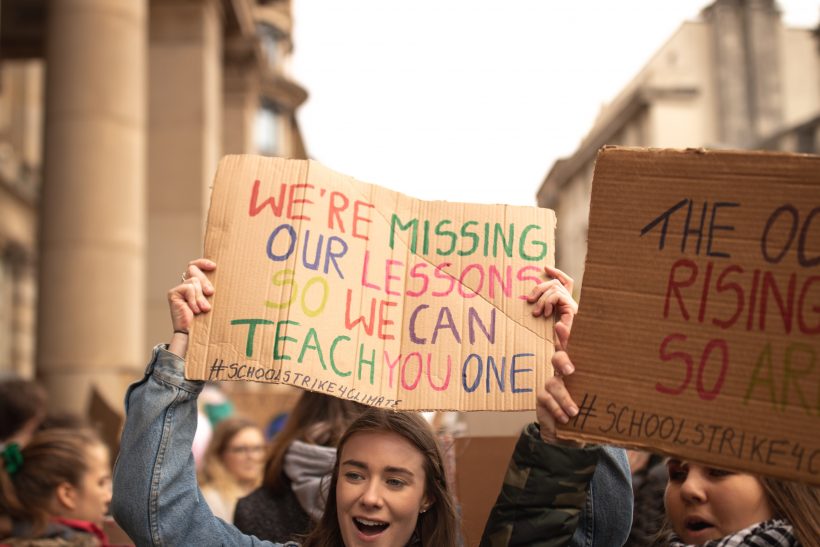
My 7th grade class is full of "good" kids. In fact, you might even call them the "best" kids-- if you believed in ranking children. These are the kids that did all their math worksheets without being asked. The kids that were reading with a flashlight by kindergarten. The kids whose immigrant parents told them every day that if they came home with less than an A, they were going to hear about it, and so was everyone on the block. The slipper was going to come out. The Best Education Money can Buy Can't Also Buy you Autonomy These kids have already gotten far. By the 6th grade, they were accepted into TEAK Fellowship, which until 2019 accepted only 30 kids out of hundreds of applicants, to prime them for the best education money could buy. But in their case, the education would be free. It was an attempt to level the playing field, and put them in the circles where they belonged by their own merit. But what to do when-- because of your age, stage and developing personhood-- your whole body is telling you you need to strike out on your own, take risks, be autonomous? And yet, here you are, in a Fellowship, in Family Systems, that expect a lot from you? What's rebelling against authority worth? In their blood and bones, my kids understand what it is to rebel against authority. They may have read a lot about it, but most have never done it. That doesn't mean they don't know what it would taste like. Fizzzzzzzzzz and fire. They might know-- ancestrally, or because of the circles of oppression which they and their families navigate- what it means to have a colonizer breathing down your neck, making you pay at every turn for...for what? They might know what it means to not be represented in a governing body. To have people speak for you who know nothing about you, and can't handle your hair. To see that the dominant system does not have your best interests at heart, nor is able to pronounce (or remember) your last name. Gomez or Gonzalez? Continue Reading …
Develop Your College Essay like Spreading Peanut Butter

Americans eat something like a billion pounds of peanut butter per year--and most students feel, at their most eye-roll-y moments, like they write about a billion college essays (all those supplements!). If you want to develop a good essay, however, we could learn a thing or two from our popular staple peanut butter. The Peanut Butter /Writing Process My older stepson, K, is a bit obsessed with pb&j. Turns out it's also the #1 choice of pre-game meals for the NBA (though they could afford caviar!), and most non-allergic elementary school kids (who scoff at caviar!). As soon as K walks in the kitchen, the possibility of pb hijacks his decision-making process. He pulls out the bread, the oversized jars of pb and local honey, and gets to work. His heart throbs. The thing is, it's torture watching him make it. Because he takes so very long, spreading that peanut butter. He runs the flat edge of the butter knife over and over the bread until there are zero lumps. The pb is exactly smooth. And 10 minutes have passed, maybe more. He devours it in three bites. Develop, delete; create, destroy; produce, consume; repeat. Why this makes me want to lose my mind is a good question-- it's not my time or my sandwich. Your college essay is not mine either. And I don't lose my mind over it, nor should you (except in the healthy way that sometimes we need to lose ourselves to find ourselves). However, I think we could consider K's approach to peanut butter spreading as one of the perfect metaphors for a common problem-- the essay that a writer did not develop evenly sometimes misses the mark. So what do you need to consider to develop a strong essay? Not a flimsy, disappointing sandwich? How to develop your college essay (quick & dirty): don't over-expend on the intro include enough backstory vivify with scenesmake some meaninghave realistic aspirationsconnections should be freshin conclusion, DON'T SAY IN CONCLUSION!--but give me a gift! Put it Continue Reading …
Family Illness as Essay Topic

There is a myth that if you haven't faced adverse experiences like family illness, you can't write a great college essay. That's BS. You can write a great (college) essay on literally anything (and I rarely use the word "literally"). But at its center, the essay is about you. Everything else is a window to you. There is another equally problematic myth that if you've faced a family illness, that's automatically great topic for your essay. It might be. It might not be. I'm going to lay out some basic considerations if you're thinking about writing about someone else's illness, loss or tragedy that impacted you. Even if that's not your situation, read these pointers to learn a little about good writing. Resources for Illness and Loss First: some of the best sources I know to help cope with loss or grief are the teachings of Roshi Joan Halifax, Stephen and Ondra Levine, Frank Ostaseki, Sobonfu Somé. Also check out Terrible, Thanks for Asking, by Nora McInerny. Is Illness or loss part of your story? Are you even ready to go there? Some of my students have experienced intense familial illness and loss---at such a young ago. When I sit and listen to teenagers tell me about how this impacted their family unit, I grip my chair and breathe with them, encouraging us to keep our hearts not slammed shut around pain. I'm so impressed by how much they handled, and, often, how they handled intense emotional upheaval without totally checking out. I do not, however, suggest they write their essays on this. My own mother lost her mother when she was 13, and no one talked with her about what was happening. Or--gasp-- the fact that she might have feelings about it. She had to deal with those herself and for years, even to this day. I get how this stuff changes everything, forever. I also get how the processing is rarely instantaneous. Here's what to ask yourself if you think you want to write about illness or loss: What qualities of Continue Reading …
Parents, Don’t Lose it Over the Essay

Last year I was a contributor at TeenLife Mag and got to offer some advice on one of my favorite subjects: relationships. In particular, how parents and kids can avoid losing it over the college essay. I'm a parent and step-parent now, and I really get how tricky it can be. We all need reminders that our relationship with our kid is faaaaar more important than anything we might want for them to accomplish. It doesn't always feel that way-- when our kids don't want our input. It doesn't always feel that way-- when our kids act annoyed that we parents seem so focused on a deadline. It doesn't always feel that way-- when we parents worry about the future. It doesn't always feel that way-- when we parents think our kid might be too focused, too stressed, and we want them to take a breather. An Interactive Talk For Parents (Let's Not Lose our Shiz!) If you're local to Brooklyn, you can come to an interactive talk at Bee Tutored-- register here. If you're not local, we can book a phone session. This might be the most important thing I have to offer, and that you have to offer: love, love, love. It looks different in every family system, just like every family looks different. I'll offer tools to help your inner world when the outer world is just a tad nutty. Please come be part of the conversation! We can take back the college essay! Continue Reading …